|
|||||||||||||||||||||||||||||||||||||||||
|
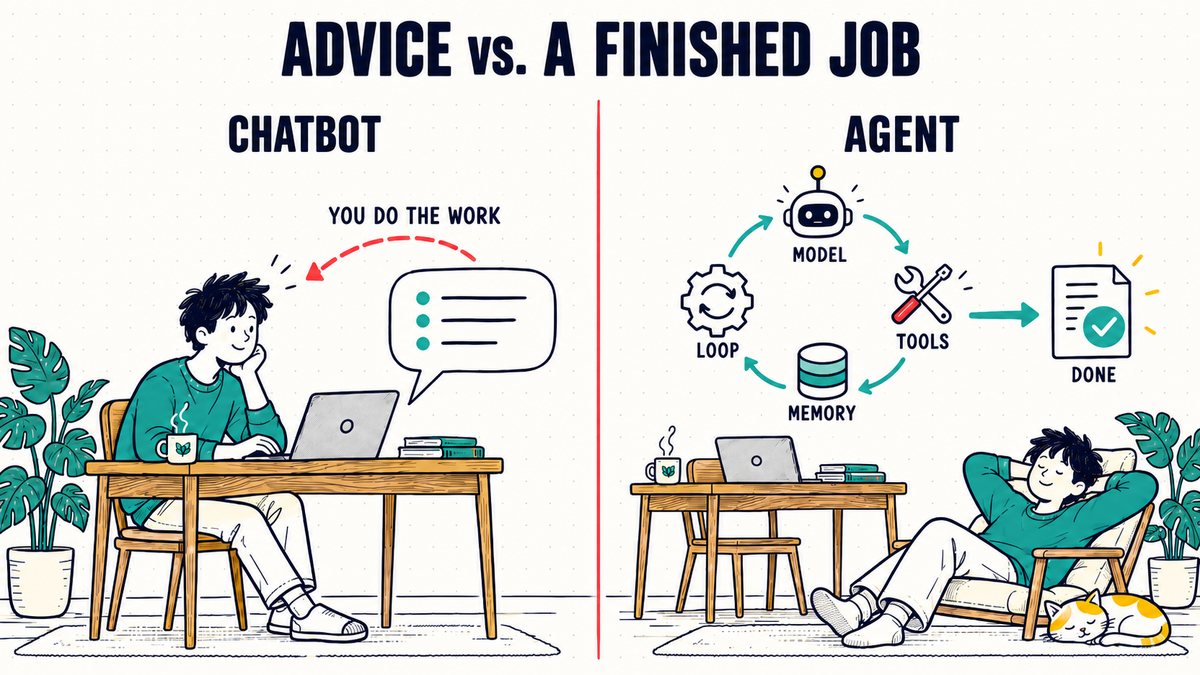
This issue was supposed to land on September 15th. That day, the laptop that sends this newsletter lost its internet connection. The software tried 88 times to reach the email service, failed 88 times, and then marked the issue Sent. Zero emails went out. Nothing crashed, nothing beeped. The only evidence was a line in a log file. That's the catch with hosting your own things: you hold all the keys, and you're also on call for a laptop. I'd still tell you to do it. Just expect the failures to be quiet ones. The friends and family who've reviewed this newsletter agree that the plain English works. Then comes the question: "Cool, but when do we get to the AI part?" So here it is. You can just have an assistantWhat an "agent" actually isAn AI agent is four ordinary things stitched together:
A chatbot is a well-read friend you can call for advice. An agent is that friend holding your keys and a to-do list, who calls you back when it's done. Where agents go wrong
Proof it's leaving the lab: Google will phone a business for youSince mid-2025, Google Search can call local businesses on your behalf:
It talks to whoever picks up, and it's free in most US states. The idea dates to 2018, when Google demoed an assistant booking a table in a startlingly human voice and everyone asked whether it should have to admit it's a robot. It does now: the call opens by saying it's Google calling for someone, and businesses can opt out. Finding a table is a separate feature. Google's AI Mode will take "dinner for six, Thursday, somewhere good for vegetarians" and check availability through partners like OpenTable. The two will probably merge. PYMNTS has a short write-up of the launch. Mine is named FloydI use a hosted personal agent called Instinct, and I named mine Floyd. I text it like a person. It can see my email, calendar and documents, and it can drive a web browser. Earlier assistants answered a question and forgot I existed. Floyd follows through. Instinct is invite-only, so for now I'm the bouncer at the most boring nightclub in tech. Want in? Reply to this email and I'll send you an invite. Further reading: WIRED's review of Instinct, which likes it and is frank about the risks. I asked Floyd to write down what it has done for me, from its own records and not from memory. These are the ones that stopped me. Story 1 · While I slept “Do all of it, good night.” Floyd · iMessage · 10:17 pm
My lines are verbatim. Floyd’s are condensed from the real thread. I went to sleep and work happened. That’s when it stopped feeling like a toy.
Me, to Floyd, 10:17 pm. (Yes, I know how this one ends.) Story 2 · A byline I never approved The article under my name Product Marketing Alliance ran a first-person article under my byline that I never reviewed. Floyd wrote the escalation to the founder and a 16-point correction list. Then it edited their Google Doc directly. It doesn't own that doc, so it made up a convention on the spot:
It reviewed their preview, caught three problems they'd missed, and only then told them to republish. The corrected piece is live: “Feed AI the right context, every time.” Story 3 · The voice problem “It still sounds very AI.” I’m hosting an online Q&A. Floyd logged into the site, found nine waiting questions, and drafted all nine answers. Floyd · iMessage
Condensed from the real thread. A first draft is cheap. The test is whether it takes the correction. This one did. Story 4 · The weird one Two assistants, one event
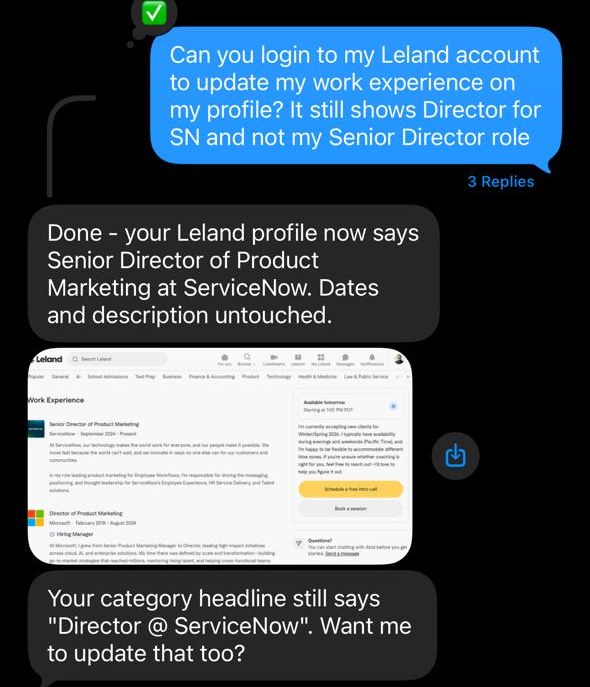
My wife has an Instinct agent too, and hers is named Susan. For an event she ran, Susan sent Floyd the logistics directly. Floyd built a door check-in tracker, and the next day it noticed the ticketing platform still listed seven cancelled guests as attending, and flagged them for me. It's slightly eerie, very useful, and an early look at how these things will talk to each other. Story 5 · The everyday stuff Fix my job title Most of what Floyd does is this unglamorous. I asked it to log in to a coaching platform and fix my job title. It did, sent a screenshot as proof, and then pointed out that my headline was still out of date.
A real thread, cropped. Add those up and the pattern repeats. It holds a thread for weeks, works inside real systems (my email, my calendar, other people's documents), and talks to other agents on my behalf. A chatbot can't do any of that. Meta built one tooInstinct isn't the only one. On September 8th Meta launched Muse, its own personal agent, in a Muse app and inside WhatsApp. It books travel, fills in forms, shops, and keeps working after you close the app. Same idea, aimed at billions of people instead of a waitlist.
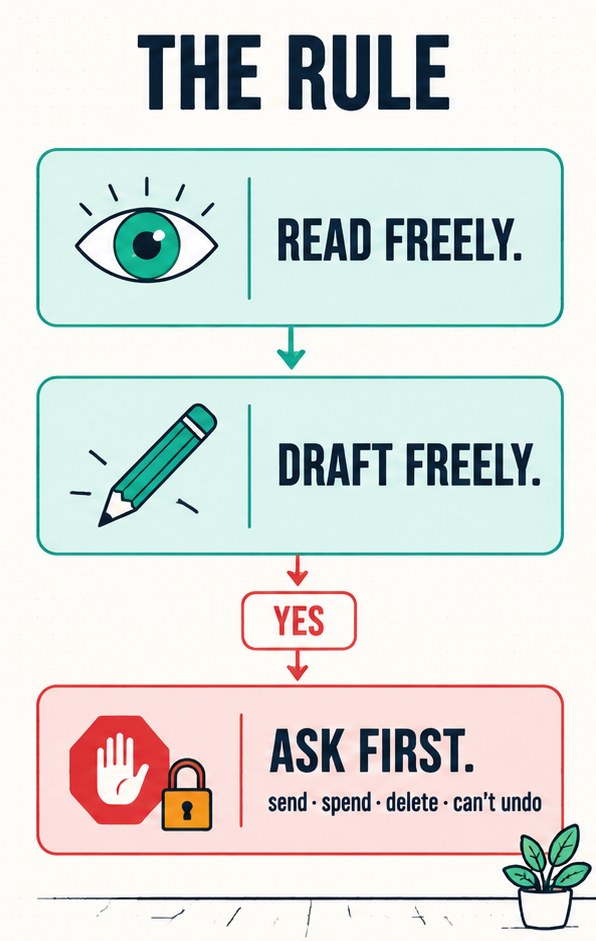
The last row matters most. Muse is built to ask before anything risky, and its approval checks reportedly run outside the AI, so a confused agent can't approve itself. Instinct bets on trust and speed. I don't know which bet wins. Here's a side-by-side comparison if you want the detail. And then there's SydFloyd lives on somebody else's computer. Syd lives on mine. Syd is the personal agent I built from scratch. It runs on the same home server as this newsletter (yes, the laptop from the top), and I talk to it on Telegram. It has the same four parts, model, tools, memory and loop, and I built each one by hand so I could see how it works. I set one rule on day one: anything that goes out into the world gets staged for my yes first. Over the next few issues I'll open it up for a proper deep dive: how it's put together, the guardrails, what it costs to run, and what broke. The catchI'm not telling you to hand an AI your inbox. The privacy and security concerns are well documented. Start with a low-stakes account, not the one holding client or financial email. Keep "ask me before you send" on from day one, and treat a new agent like a new hire: small jobs first, more access as it earns it. Floyd earned a lot over six weeks. It didn't start with it. One more thing gets more important as agents do more for you: your data. That's doubly true if you host it yourself, as my September taught me. A backup you've never restored isn't a backup. Take a snapshot, restore one file into a scratch folder, and open it with your own eyes. Next time: build a tiny agent of your own, with limited access and written rules. After that, the Syd deep dive begins. — Abid P.S. Want a specific agent walkthrough? Reply with what you'd hand over first. I read every one. |
|||||||||||||||||||||||||||||||||||||||||
|
Enjoying this? If you think someone else would find it useful, forward it their way — they can subscribe at abidc.dev. |